
Size & capacity
Sheet size, spine width and ring capacity defined from intended document load and buyer specification.
D-ring binders are manufactured to buyer specification for private-label, wholesale and branded programs. Construction, material, ring mechanism, printing, finishing and packaging are configured to the approved sample and order specification.
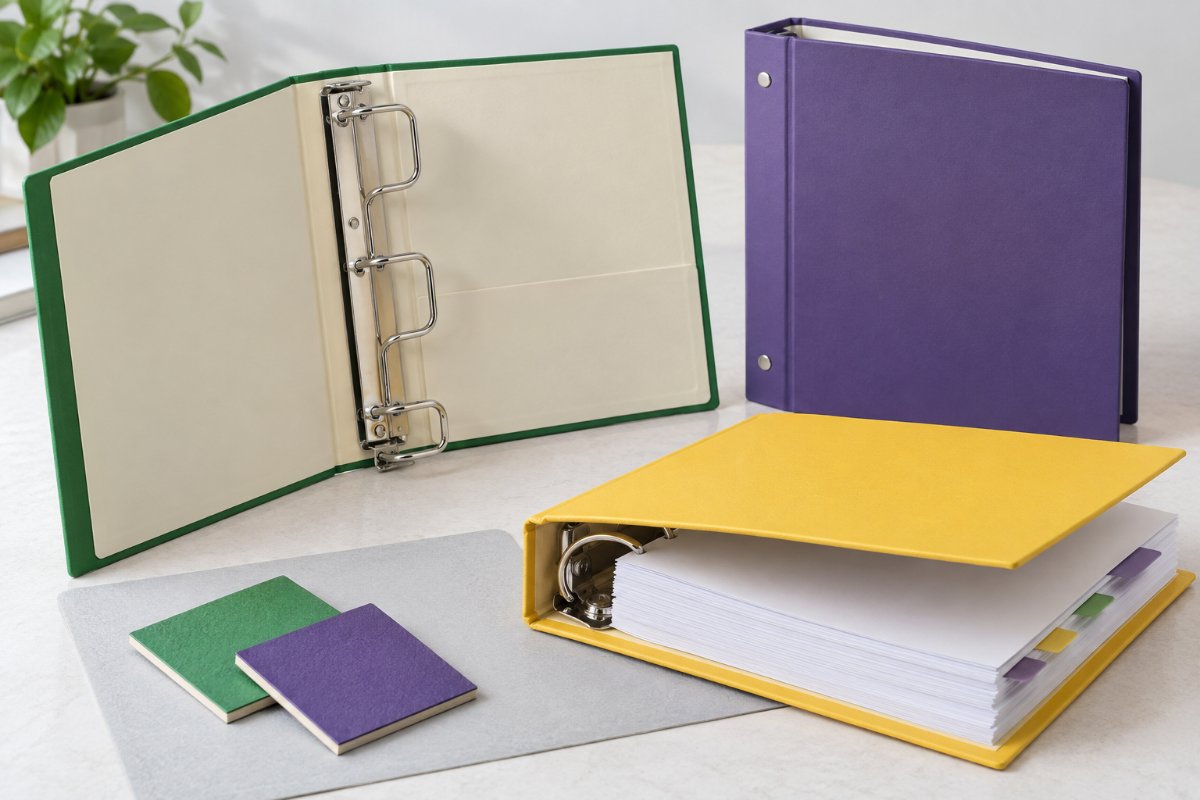
Available dimensions, ring capacities, cover constructions and material specifications are confirmed against the buyer's requirements, reference sample and approved production specification.
| Mechanism | D-ring binder mechanism; exact ring capacity and configuration to approved specification. |
|---|---|
| Binder construction | Configurable by buyer specification and approved sample. |
| Materials | Factory works with PP, PVC, PU, greyboard, paperboard, kraft, recycled and PCR grades; applicable construction confirmed per enquiry. |
| Printing | Offset and screen printing on applicable PP and board constructions; Pantone matching available. |
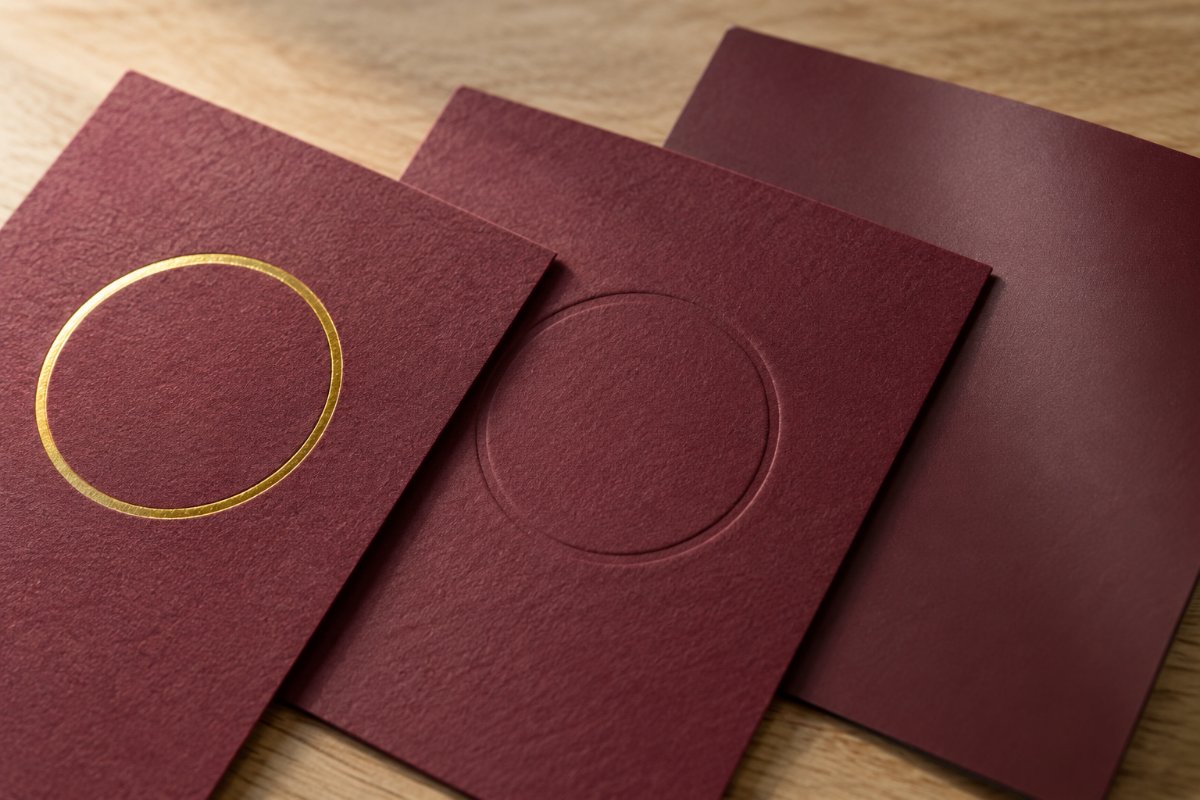
| Decoration | Hot foil, embossing, debossing, matt, gloss, soft-touch and UV finishes where construction permits. |
| Assembly | Ring mechanism fitting, eyeleting and riveting available in-house. |
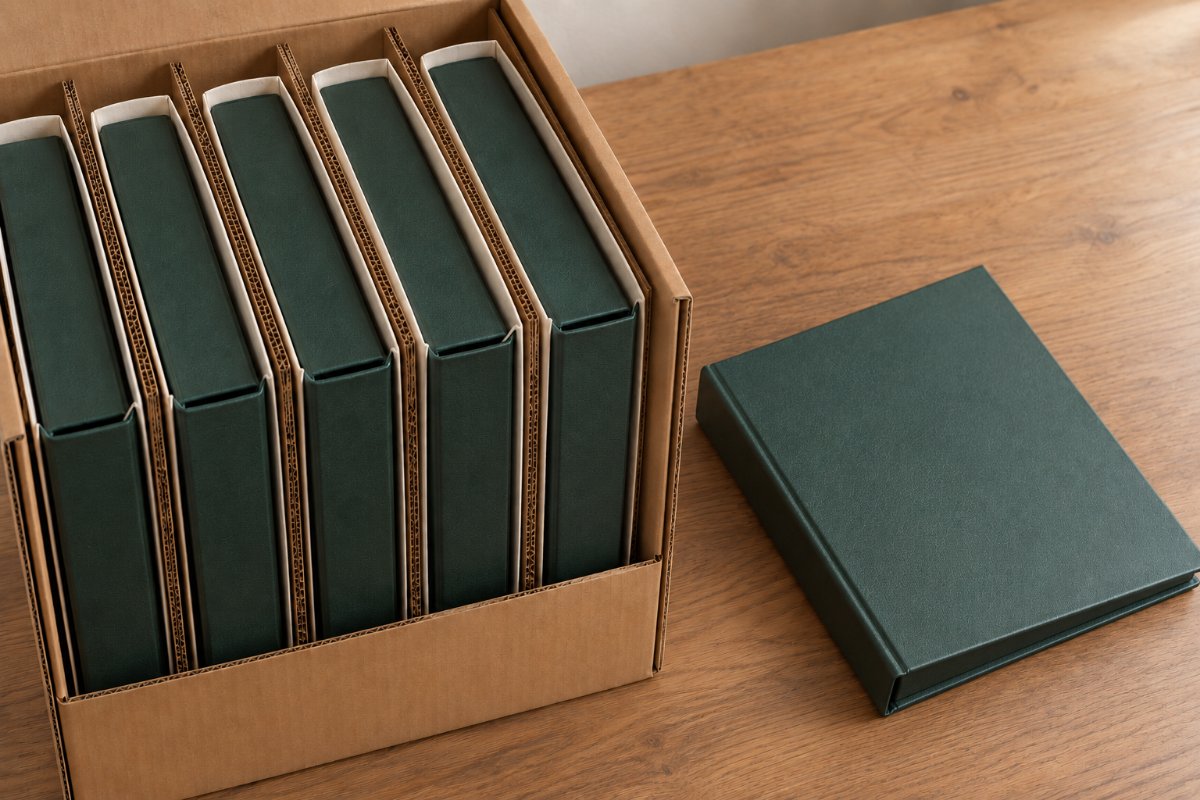
| Packaging | Unbranded or buyer-branded packing, barcode and retail labelling, retail-ready cartoning. |
| Factory location | Dongguan, Guangdong, China. |
The straight side of a D-shaped ring supports a stack of punched sheets, while the curved side allows pages to turn. The visible spine width is not a capacity measurement: board, hinges, ring position and clearances all consume space. Send the actual paper stack, including dividers and punched pockets, so the mechanism can be evaluated with the contents that will be supplied.

Document format, ring count and hole centres must be specified together. A4 describes a 210 x 297 mm sheet; it does not define a universal punching pattern. Check rivet centres against the mechanism base plate and check that fasteners do not leave an exposed surface inside the cover. A filled sample should close without the front cover pressing on ring tips.

Turn sheets from the front of the stack to the back, close the cover, and reopen the loaded binder on a desk. Inspect for snagging where ring halves meet and pages extending beyond the protective cover. If index tabs or sheet protectors are included, measure their projection separately; a binder sized only to the paper edge may leave them unprotected.


Selwera does not publish generic price tables because cost follows construction. Specify these variables first.
Standard QC runs from incoming materials through first article, in-process, final and pre-shipment inspection. Binder-specific defect classification includes ring misalignment or non-closure, print/Pantone deviation against the approved sample, lamination bubbles or delamination, board warp and burrs on die-cut edges.
| Sampling standard | ISO 2859-1 / ANSI-ASQ Z1.4, single sampling, normal severity, General Inspection Level II. |
|---|---|
| AQL | 0 Critical / 2.5 Major / 4.0 Minor. |
| Third-party inspection | Buyer-appointed SGS, Bureau Veritas, Intertek, TÜV, QIMA and Cotecna inspection supported. |
The mechanism geometry differs. The exact choice should be matched to required paper capacity, page movement, spine construction and target format.
Available ring capacities depend on the selected mechanism, binder format and required paper load. Confirm the required capacity with the quotation specification.
Yes. Buyer-branded or neutral packaging, artwork confidentiality, private tooling rules and buyer labelling form part of the private-label program.
Send binder size, quantity, intended paper capacity, construction or reference sample, material, artwork, finishing, packaging and target delivery date.
Send a reference sample, drawing or specification together with quantity and target delivery timing.