
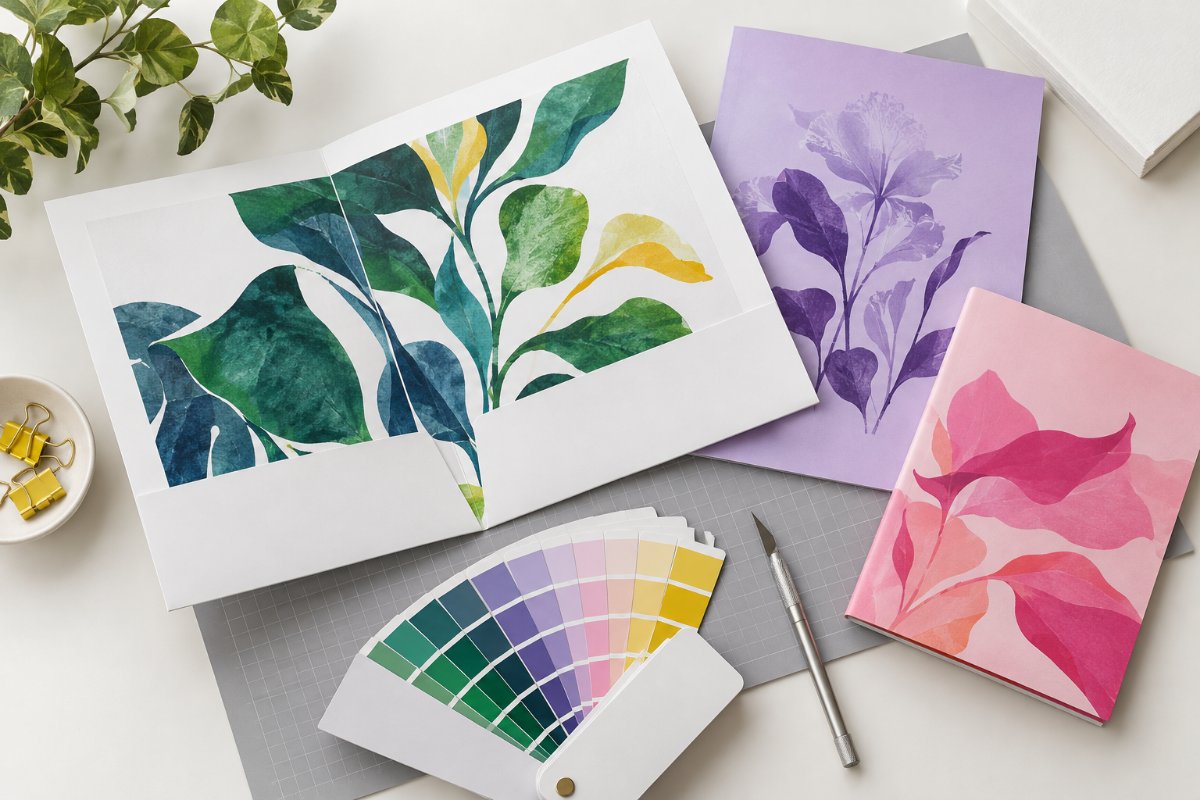
Production Template
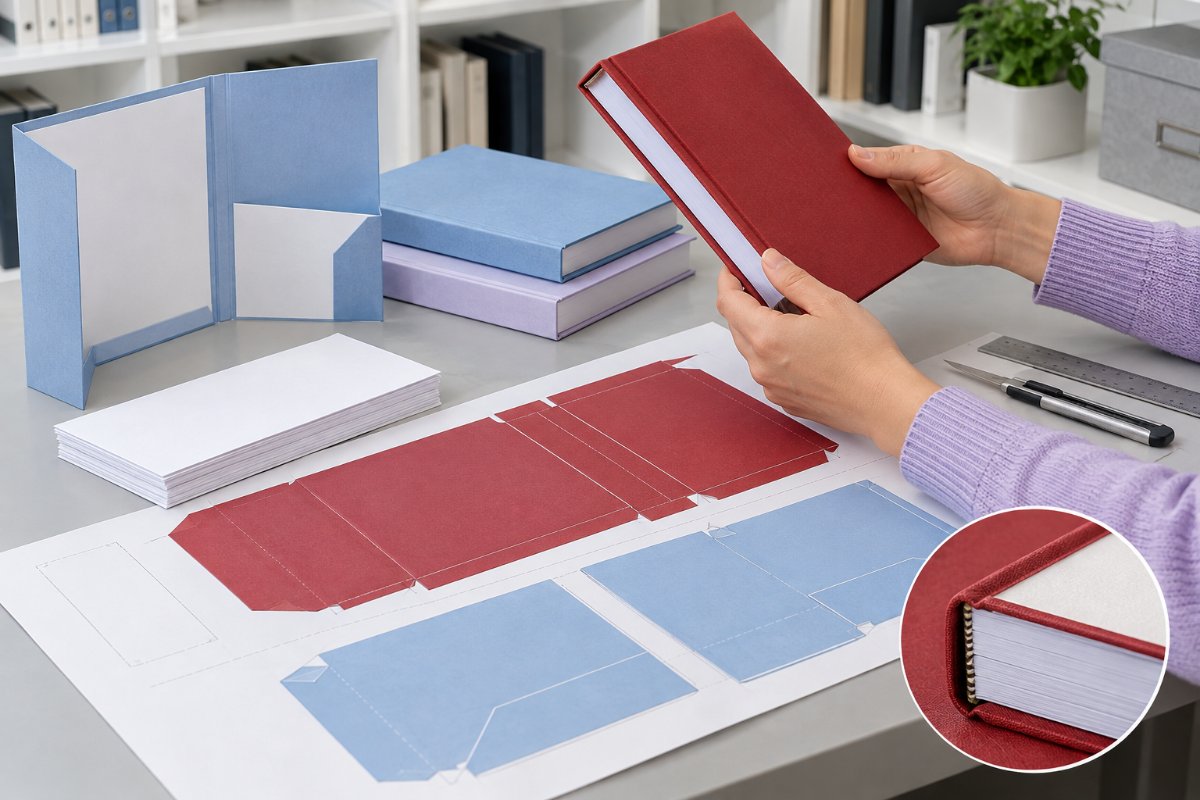
Obtain a dieline for the chosen construction before finalizing graphics. Page size, cover size, pocket layout and spine width are different dimensions. Keep technical marks on a separate layer and identify orientation. A hardcover spine should be derived from the final block, while pocket-folder artwork must account for turned-in panels and glue areas.
Colour and Finishing
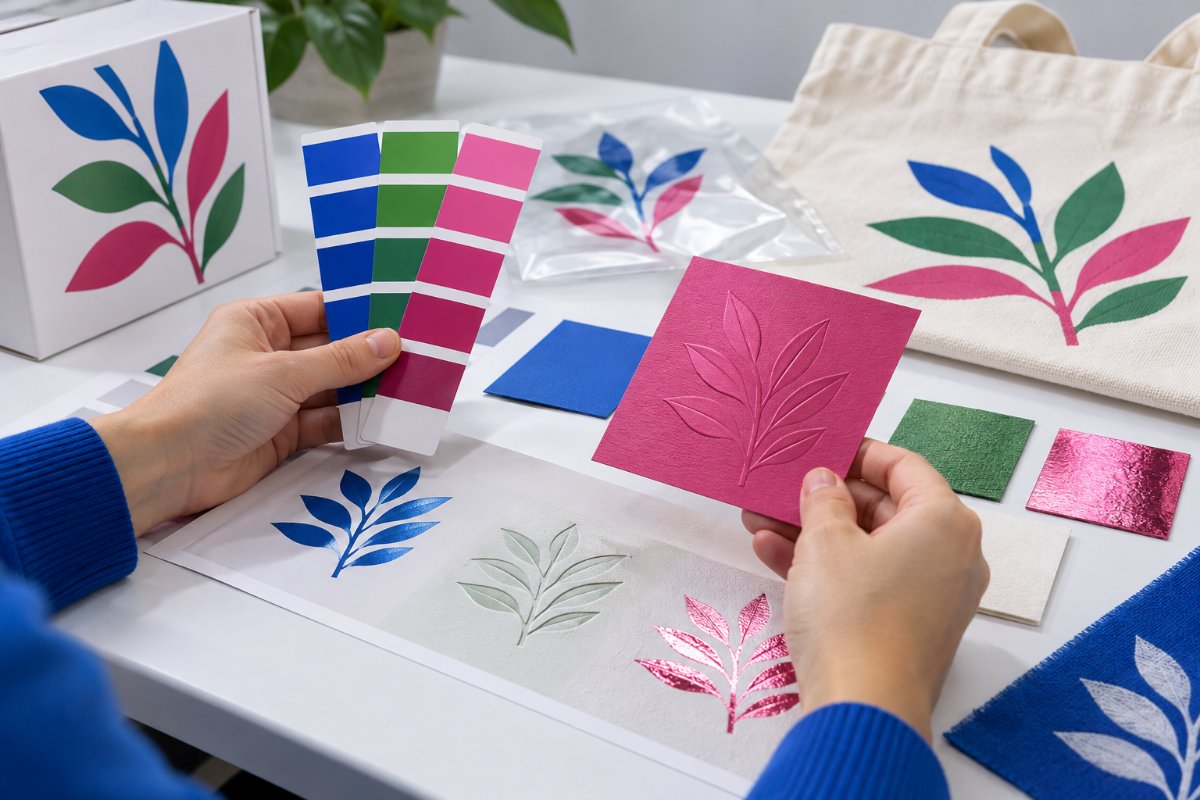
Identify process or spot colours and supply the intended colour reference. Foil, emboss, deboss and other effects need separately identifiable artwork and positions. The same artwork may reproduce differently on paper, PP or textile. Confirm the proof needed for material appearance as well as a proof for text, alignment and spelling.
Artwork Files
Include a revision identifier, linked graphics and the required font treatment. Use the agreed file format and mark obsolete versions clearly. Provide barcode data and intended label dimensions as a separate controlled item. Keep language versions distinguishable so a correct design is not printed on the wrong regional product.
Conversion Approval
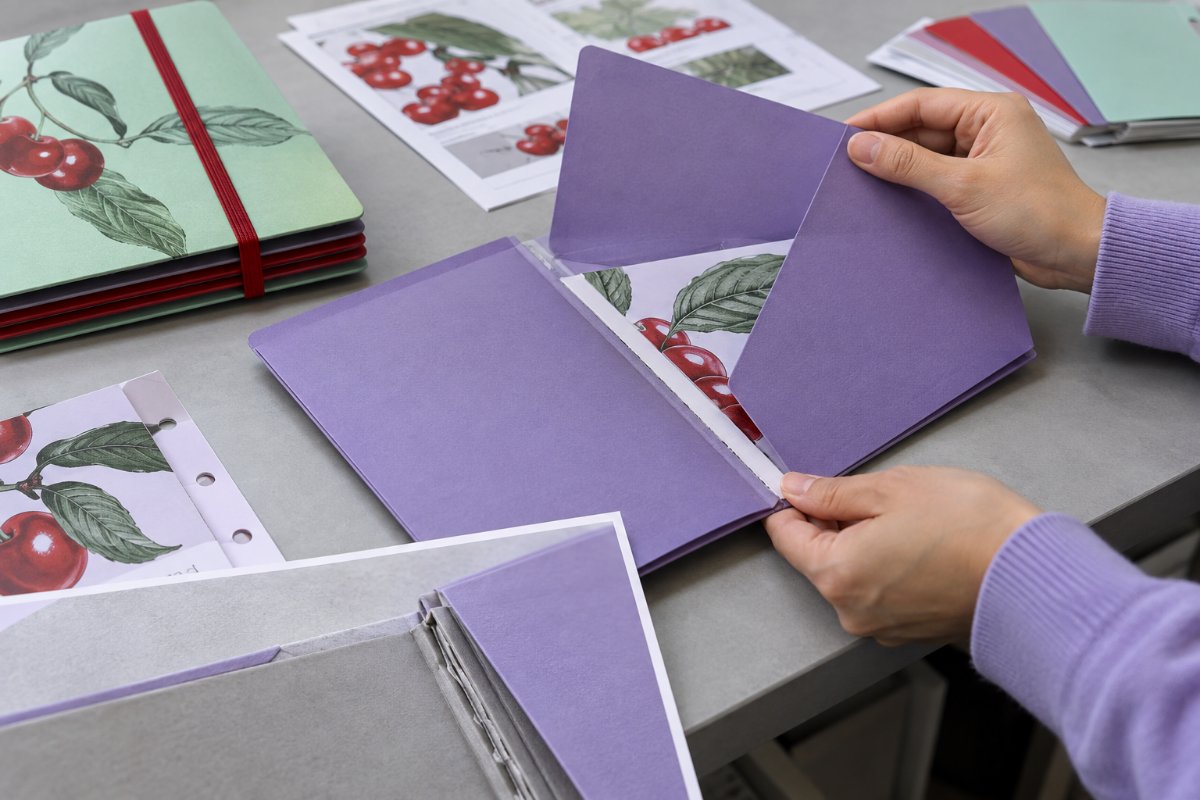
A flat proof cannot reveal every folding or binding issue. Review decorated samples at hinges, corners, seams and punched margins. Check whether important text is hidden by a pocket, mechanism or closure. Record the final approved file revision alongside the physical sample and avoid introducing a late artwork change through an informal message.
Project Checklist
- Approved dieline and panel orientation
- Revisioned print and finishing files
- Colour reference and proof expectations
- Barcode, language and SKU mapping