

Functional Requirements
Start with stiffness, flexibility, visibility, handling and intended contents. A PP wallet, wrapped binder and sewn sleeve require different material information. Define grade, thickness or grammage, colour and finish for each layer. A phrase such as premium cover or heavy board is not enough to control substitution or compare supplier proposals.
Material Compatibility
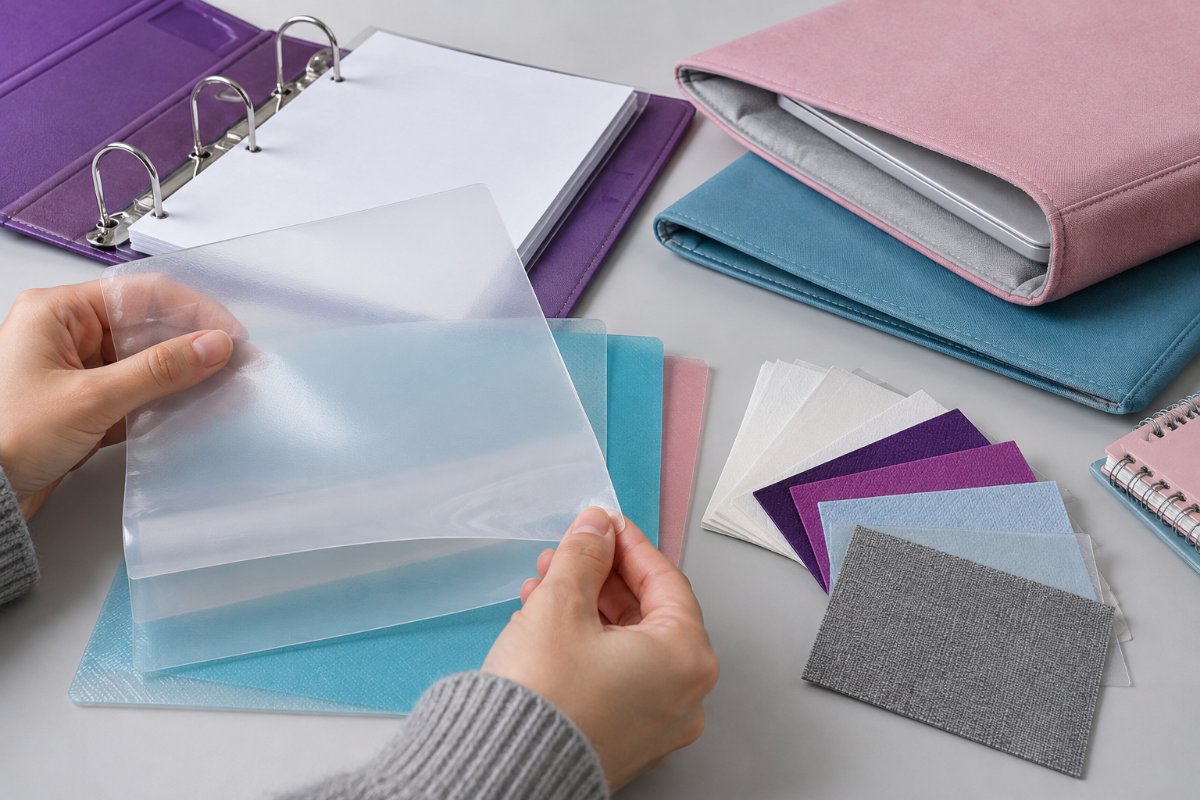
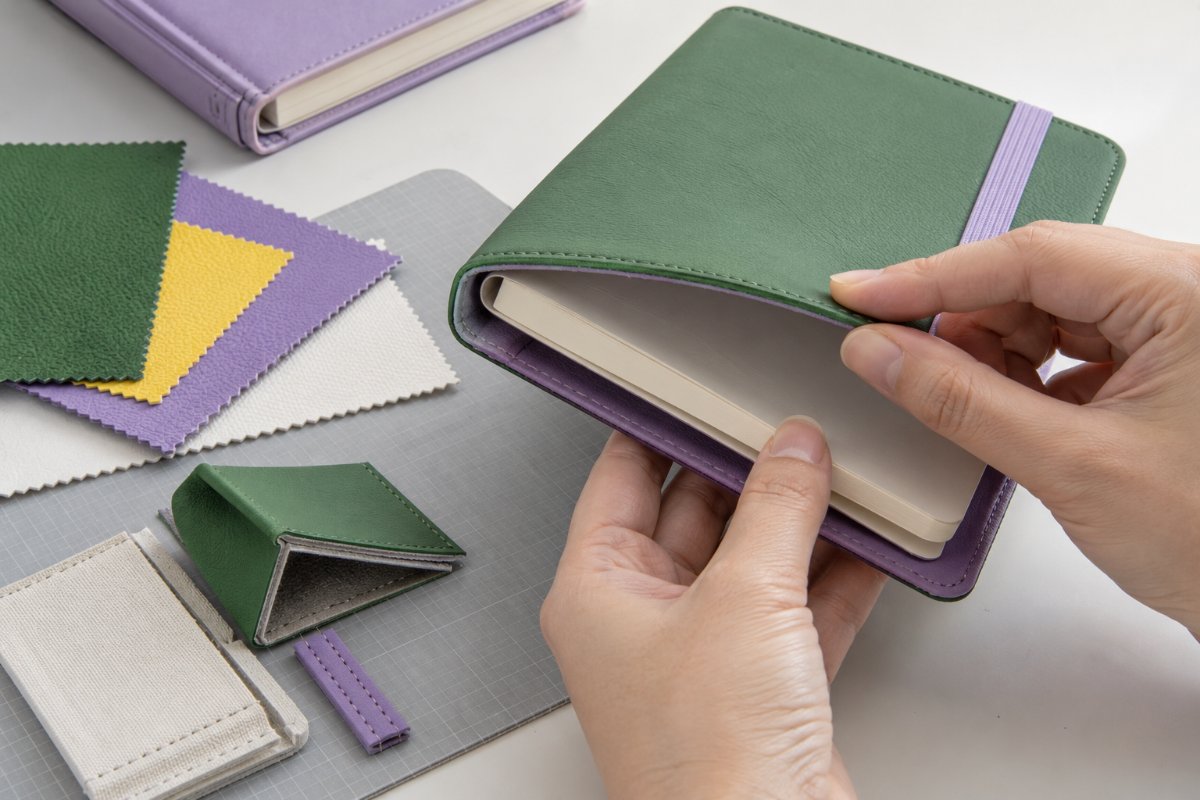
Printing, scoring, welding, gluing and sewing interact with the selected grade. Review corners, joints and contact surfaces in a finished sample rather than only approving a swatch. A thicker layer can reduce sleeve clearance or alter notebook hinges. Test the proposed combination before accepting an appearance change that also changes function.
Content Claims
Recycled or PCR requirements need a stated proportion, material scope and supporting evidence appropriate to the claim. Certified-material requirements must be checked against current scope and the actual order. Avoid carrying a claim from one material into a complete mixed-material article without review. Tell the supplier what wording the buyer intends to use on packaging.
Material Substitutions
Link material records to the sample and drawing revision. If availability changes, compare the proposed replacement for appearance, dimensions and manufacturing compatibility. Reapprove relevant characteristics before production. A similar colour or nominal gauge does not by itself establish that the replacement will behave identically at folds, seams or fasteners.
Project Checklist
- Layer-by-layer material record
- Gauge/caliper or gsm as appropriate
- Finish and process compatibility
- Claim wording and evidence scope